Der ultimative Leitfaden für eine erfolgreiche internationale SEO-Strategie im Jahr 2025

Sind Sie bereit, globale Märkte zu erobern? Ihre Blaupause für eine robuste internationale SEO-Strategie beginnt hier
In the hyper-connected digital landscape of 2025, thinking globally is no longer a choice—it's a necessity for growth. Expanding your business beyond its native borders isn't just about translating your content and hoping for the best. It’s a strategic endeavor to ensure your brand’s voice, products, and services are not just seen, but are easily discoverable and culturally resonant in every new region you target. A meticulously executed international SEO strategy is the engine that can power exponential growth in traffic, deepen user engagement, and ultimately, skyrocket your revenue.
With the right approach, your business can dominate global keywords, capture high-intent organic traffic from diverse markets, and build a truly international brand. This comprehensive guide will walk you through the essential steps to architect, implement, and refine a successful international SEO strategy. We'll also highlight how Die Automatisierungsplattform von MultiLipi kann diesen komplexen Prozess rationalisieren und wichtige SEO- und Lokalisierungsaufgaben automatisieren, um Ihnen bei der Skalierung unschätzbare Zeit und Ressourcen zu sparen.
Warum internationale SEO für den globalen Erfolg im Jahr 2025 nicht verhandelbar ist
The digital world is vast and multilingual. Relying solely on an English-first strategy means you're leaving an enormous amount of potential revenue on the table. Consider this: according to a recent analysis by Statista , over 60% of global internet users speak languages other than English. This number is not static; it's growing every day. Without an effective international SEO strategy, your business is invisible to a majority of the world's online market.
International SEO is the practice of optimizing your digital presence to rank prominently in various search engines (like Google, Baidu, Yandex) across different countries and languages. It’s the technical and cultural handshake that tells search engines how to index your content correctly and present it to the most relevant users in their native language and location.
Why Is This Critical for Your Business?

- Erweitert Ihre Reichweite massiv: A proper strategy increases your website's visibility on a global scale, putting your products and services in front of a much broader audience actively searching for what you offer.
- Verbessert die Konversionsraten erheblich: Customers are overwhelmingly more likely to purchase from a website that speaks their language. By localizing content and targeting users with culturally relevant messaging, you can significantly boost conversion rates. In fact, research from the Beratung mit gesundem Menschenverstand zeigt, dass 75 % der Verbraucher es vorziehen, Produkte in ihrer Muttersprache zu kaufen.
- Builds Unshakeable Trust with Global Customers: A localized website is a powerful trust signal. It shows customers that you understand and respect their culture, which is fundamental to building lasting relationships and brand loyalty.
- Macht Ihr Unternehmen zukunftssicher: As emerging markets come online, having an established international SEO framework allows you to pivot and capture new opportunities faster than your competitors.
An optimized international SEO strategy ensures you get found, get clicked, and build a brand that resonates with users across the globe.
Schritt-für-Schritt-Anleitung

Schritt 1: Den Grundstein legen: Strategische Marktforschung
The first—and most critical—step is data-driven market selection. Blindly translating your website into the world's most spoken languages without understanding the market dynamics is a recipe for wasted resources.
So führen Sie effektive internationale Marktforschung durch:
- Analysieren Sie Ihre vorhandenen Verkehrsdaten: Ihr aktuelles Publikum hält wertvolle Hinweise bereit. Verwenden Sie Tools wie Google Analytics 4 und Der Markt-Explorer von SEMrush to identify which countries are already sending traffic to your site. Is there an unexpected pocket of users from Brazil or Japan? This is your low-hanging fruit.
- Assess Market Viability and Search Demand:Schauen Sie sich nicht nur die Bevölkerungsgröße an. Verwenden Sie Tools wie Ahrefs Keyword Explorer to analyze regional search volume, keyword difficulty, and competition for your core products or services. A country with high search demand and manageable competition is an ideal target. Also, consider the dominant search engine; while Google is king in many places, Baidu rules in China and Yandex in Russia.
- Navigieren Sie durch rechtliche und betriebliche Nuancen: Every country has a unique set of rules. Before you commit, research local privacy laws (like GDPR in Europe), tax regulations, shipping logistics, and preferred payment methods. Ignoring these can lead to significant operational headaches.
Schritt 2: Über die Übersetzung hinaus: Die Kunst der echten Lokalisierung von Inhalten
This is where many businesses falter. Localization is far more than a word-for-word translation; it's the comprehensive adaptation of your content to align with local culture, context, and consumer behavior.
Wichtige Überlegungen zur Tiefenlokalisierung:
- Sprache, Dialekte und Nuancen: Präzision ist das A und O. Ein Benutzer in Mexiko wird einen anderen Slang und andere Ausdrücke verwenden als jemand in Spanien. Die Verwendung von kastilischem Spanisch für ein lateinamerikanisches Publikum kann sich befremdlich anfühlen. Es ist von entscheidender Bedeutung, diese Unterschiede anzuerkennen.
- Cultural Relevance and Sensitivity:Humor, Redewendungen, Popkultur-Referenzen und sogar Farbsymbolik können drastisch variieren. Was in den USA lustig ist, kann in Japan verwirrend oder sogar beleidigend sein. Ihre Botschaften müssen von potenziell negativen kulturellen Konnotationen befreit werden.
- Visuelle und multimediale Lokalisierung: Don't stop at text. The images, videos, and graphics on your site should reflect the target audience. This means using models, settings, and visual styles that feel familiar and aspirational to the local market.
- Funktionale Anpassung: This includes localizing currencies, date formats (DD/MM/YYYY vs. MM/DD/YYYY), units of measurement, and contact information, including a local phone number if possible.
Die kulturelle Anpassungsmaschine von MultiLippi Automatisiert einen Großteil dieses Prozesses und liefert nicht nur genaue Übersetzungen, sondern passt auch Inhalte an regionsspezifische Präferenzen an, um sicherzustellen, dass Ihre Markenbotschaft jedes Mal perfekt ankommt.
Step 3: Building a Global-Ready Website: Technical SEO & Site Structure
The technical foundation of your site dictates how effectively search engines can crawl, index, and rank your international content.
1. Auswahl Ihrer internationalen URL-Struktur
You have three primary options, each with pros and cons:
- Unterverzeichnisse (z. B. yoursite.com/de/): Easier to set up and maintain. They consolidate domain authority, as all language versions are part of the main site. This is often the recommended approach for simplicity and SEO strength.
- Subdomains (z. B. de.yoursite.com): Treated by search engines as separate entities. This can be useful for highly distinct regional sites but requires more effort to build authority for each subdomain.
- ccTLDs (länderspezifische Top-Level-Domains, z. B. yoursite.de): The strongest signal to both users and search engines that your site is dedicated to a specific country. However, this is the most expensive and resource-intensive option.
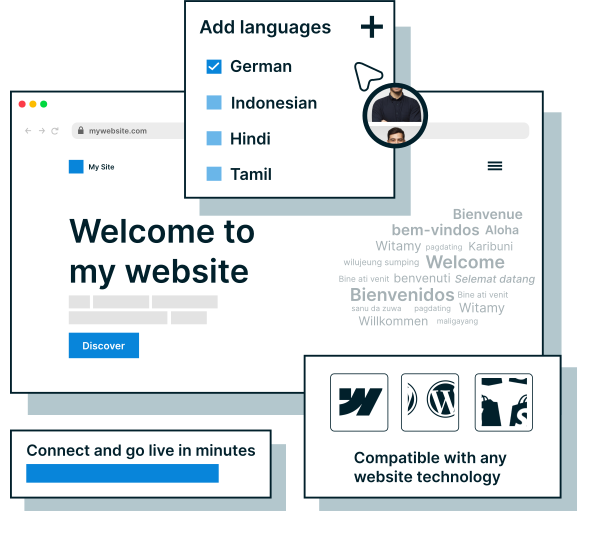
MultiLipi unterstützt nahtlos Ihre Wahl und ermöglicht es Ihnen, automatisch sprachspezifische Subdomains oder Unterverzeichnisse zu generieren, um sicherzustellen, dass Ihre mehrsprachigen Inhalte vom ersten Tag an perfekt organisiert sind.
2. Hreflang-Tags korrekt implementieren
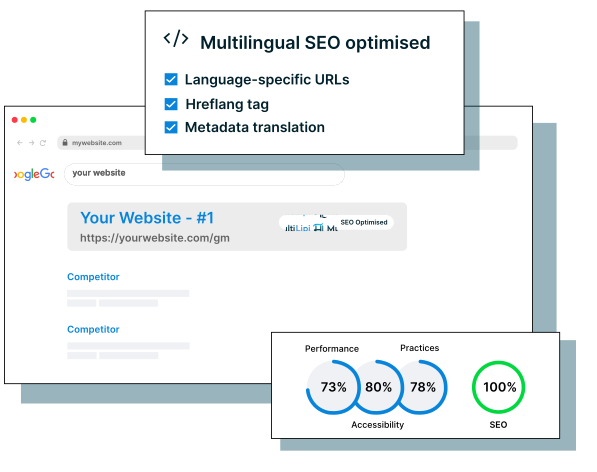
Hreflang tags are snippets of code that tell search engines which language and geographical region a specific page is targeting. For example, <link rel="alternate" hreflang="es-mx" href="https://yoursite.com/mx/" /> tells Google this page is for Spanish speakers in Mexico. This prevents duplicate content issues and ensures users are served the correct version of your site. Implementing them manually can be a nightmare, which is why MultiLipi automatically generates and injects hreflang tags into your translated pages, eliminating human error.
3. Global Site Speed and Mobile Optimization
With global mobile traffic share exceeding 60%, a responsive, mobile-first design is non-negotiable. Use a Content Delivery Network (CDN) to ensure fast loading times for users no matter where they are in the world. Google prioritizes mobile-friendly pages, and a slow site will kill your rankings and conversions.
Schritt 4: Lokale Absicht erschließen: Internationale Keyword-Recherche
Sie können nicht einfach Ihre bestehenden Keywords übersetzen. Eine direkte Übersetzung verfehlt oft das Ziel, wie lokale Nutzer tatsächlich suchen.
So führen Sie eine wirkungsvolle internationale Keyword-Recherche durch:
- Verwenden Sie lokale Keyword-Tools und Muttersprachler: Nutzen Sie Tools wie Google Keyword-Planer , Ahrefs, and SEMrush, but set the target region for accurate data. If possible, consult with a native speaker to understand the cultural context and slang behind search terms.
- Analysieren Sie regionale Suchtrends: Was sind die Trendthemen in Ihrem Zielland? Gebrauchen Google Trends to compare search interest across regions and discover seasonal opportunities you might otherwise miss.
- Konzentrieren Sie sich auf lokalisierte Long-Tail-Keywords: Diese spezifischen, aus mehreren Wörtern bestehenden Phrasen verraten die Absicht des Benutzers. Ein Benutzer, der auf Englisch nach "cheap running shoes" sucht, könnte in Spanien nach "zapatillas para correr económicas" oder in Mexiko nach "tenis para correr baratos" suchen. Es ist wichtig, diese Nuance einzufangen.
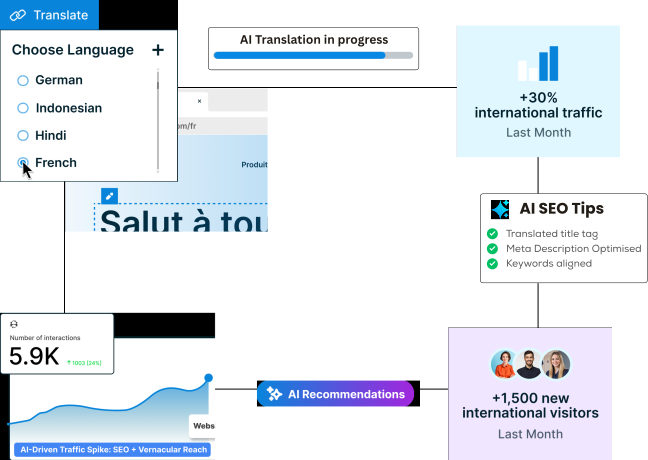
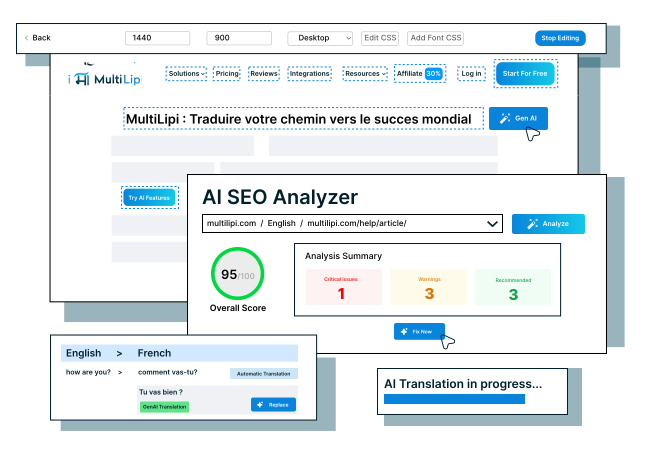
Mit MultiLipi’s AI-powered SEO Vernability Toolkönnen Sie diese lokalisierten Keywords entdecken und integrieren und so sicherstellen, dass Ihre Inhalte genau die Terminologie verwenden, nach der Ihre Zielgruppe sucht.
Step 5: Optimizing for Local Visibility: International On-Page SEO
Sobald Sie Ihre lokalisierten Inhalte und Keywords haben, müssen Sie Ihre On-Page-Elemente für jeden Markt optimieren.
- Localized Meta Titles and Descriptions: Craft unique, compelling meta titles and descriptions for each translated page, incorporating your primary local keywords. This is your first impression on the Search Engine Results Page (SERP).
- Strategische interne Verlinkung: Create a strong internal linking structure within each language version of your site. Link to other relevant content in the same language to guide users and search engine crawlers, creating language-specific content silos.
- Bild- und Medienoptimierung: Translate image alt texts and file names into the local language. This not only helps with accessibility but also boosts your chances of ranking in local image search results.
Schritt 6: Erfolgsmessung: Verfolgen Sie Ihre internationale SEO-Leistung
You can't improve what you don't measure. Monitoring the performance of your international efforts is crucial for continuous refinement.
- Monitor Geo-Targeted Traffic:Verwenden Sie Google Analytics, um Segmente für jedes Zielland und jede Zielsprache zu erstellen. Verfolgen Sie organischen Traffic, Metriken zur Nutzerbindung (wie Absprungrate und Sitzungsdauer) und Conversion-Ziele für jedes Segment.
- Verfolgen Sie lokale Keyword-Rankings: Verwende Tools wie SEMrush oder Ahrefs, um zu verfolgen, wie deine Seiten für deine Ziel-Keywords in den Suchmaschinen verschiedener Länder ranken.
- Nutzen Sie die Google Search Console: Separate Eigenschaften einrichten in Google Search Console für jedes Unterverzeichnis oder jede Subdomain, um detaillierte Daten zu Klicks, Impressionen und Indexierungsproblemen für jede Sprachversion zu erhalten.
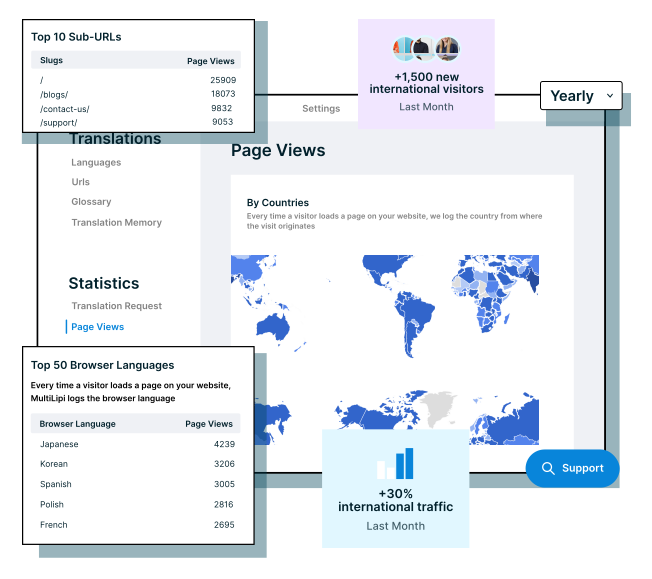
Das integrierte Analyse-Dashboard von MultiLipi Bietet Echtzeitdaten über die Leistung Ihrer mehrsprachigen Seiten, sodass Sie agile, datengestützte Entscheidungen treffen können.
Schritt 7: Die sich entwickelnde Strategie: Kontinuierliche Optimierung und Tests
International SEO is not a "set it and forget it" task. It's a dynamic, ongoing process.
- Regelmäßige Aktualisierung und Aktualisierung von Inhalten: Keep your content relevant by updating it with local trends, news, and data.
- Führen Sie A/B-Tests durch: Test different headlines, calls-to-action (CTAs), and imagery for each language to see what resonates best with that specific audience.
- Monitor Local Competitors: Keep an eye on what your local competitors are doing. What keywords are they ranking for? What kind of content are they producing? Learn from their successes and failures.
Launch Your Global Expansion with MultiLipi
If you’re serious about scaling your business globally and dominating international search rankings, MultiLipi is your ultimate partner. Our intelligent platform automates the most challenging aspects of translation, localization, and multilingual SEO, empowering you to launch and manage a high-performing multilingual website with unprecedented efficiency.
Beginnen Sie noch heute Ihre globale SEO-Reise and leverage MultiLipi’s powerful tools to unlock new markets, drive qualified traffic, and achieve your global growth ambitions.

Werden Sie Teil unseres Wachstums: Werden Sie ein MultiLipi-Partner
Haben Sie ein Publikum aus Geschäftsinhabern, Vermarktern oder Entwicklern? Nehmen Sie noch heute am lukrativen Partnerprogramm von MultiLipi teil! Promote our cutting-edge multilingual SEO solutions and earn a generous, recurring 30% commission on every successful referral. Partner with us and help businesses around the world go global.

Kommentare